Client value
When a high severity production anomaly needs diagnosing, proactive intelligence can turn a time-sensitive fix into a weeks-long investigation.
Weeks to hours anomaly resolution
The skill required to troubleshoot is becoming rare. An Intermediate DBA is scarce. In practice, complex scenarios escalate this way: Customers send a support ticket → Customers wait for days → IBM’s internal Db2 Technical Staff provide an advisory and/or remediation plan to the customer. When the problem persists, clients cycle through this process again.
Scalable resolution path
Db2 is a niche, specialized IT product with a gigantic learning curve. Deep research bridges the knowledge and expertise gap of a Junior Database Analyst from a Senior.
Sustainable talent pipeline and skill enhancement
Design Principles
Database Administrators adopt AI they can verify, recognize, and control.
Agentic AI is goal-directed, not task-directed. Operational transparency is crucial to AI trustworthiness.
How do we mitigate misalignment in procedural logic?
How do we surface traceability early and empower customers to press the eject button when necessary?
AI-native, autonomous databases are the future. How do we encourage and normalize the use of AI in their day-to-day workflow?
Given day-to-day use and ingrained mental models of traditional console UI, how do we meet existing users where they are?
Progressive disclosure is essential to AI usability. UXR insights stressed an appropriate pacing of information while also providing users with the ability to progressively control the flow of information.
How do we prevent an LLM chat dump?
UX Research was performed at IDUG EMEA Düsseldorf, Germany late 2025. We worked with 10+ Database Administrators to test a concept end-to-end design prototype. Phase 1 design considers what is technically feasible at the time.
Solution
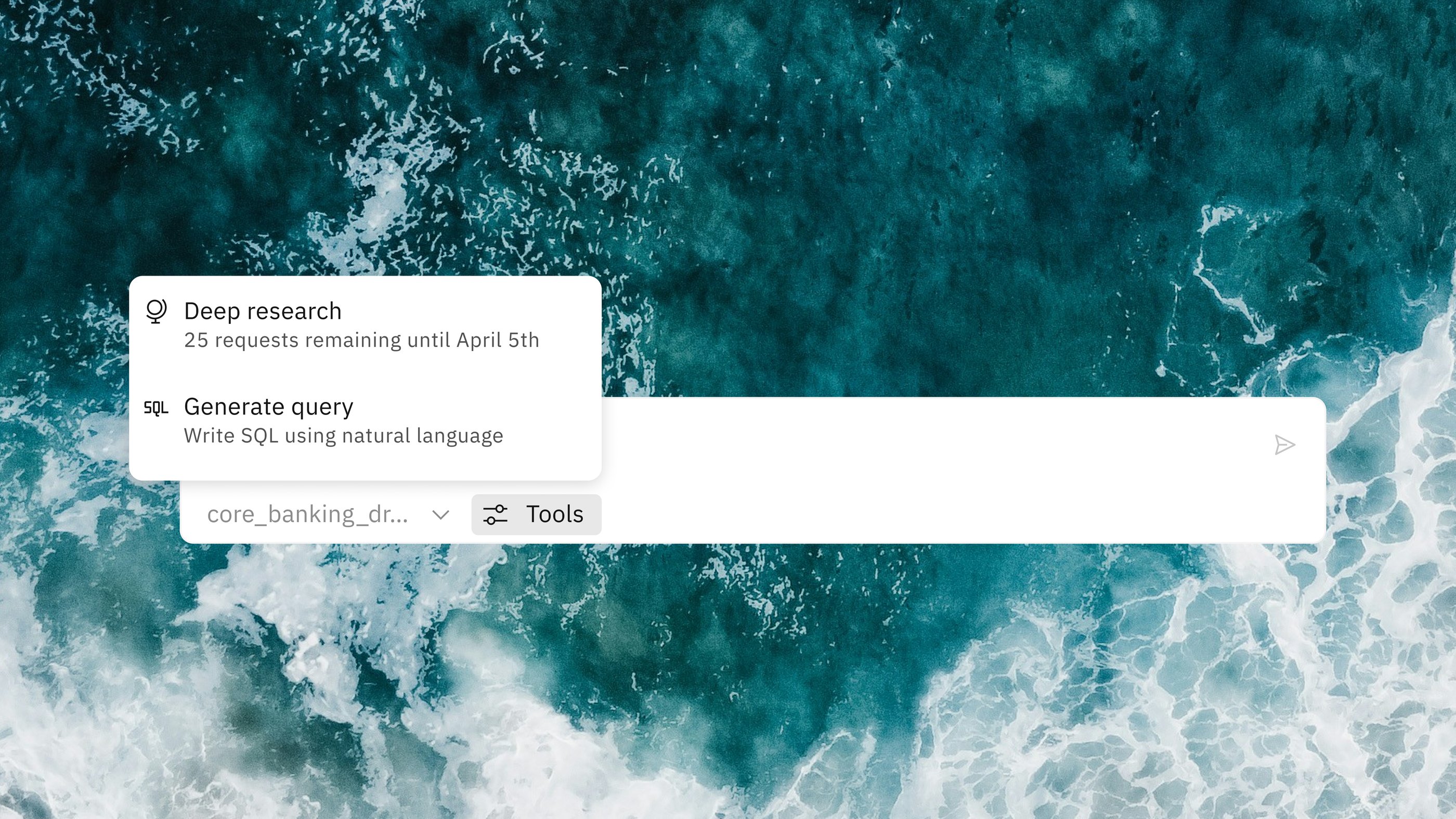
Available in the AI chat full page workspace and the side panel experience, Text2SQL and Deep research is invoked from the Tools menu in the Prompt bar. Users are endowed with monthly Deep research limits to manage token usage traffic and consumption.
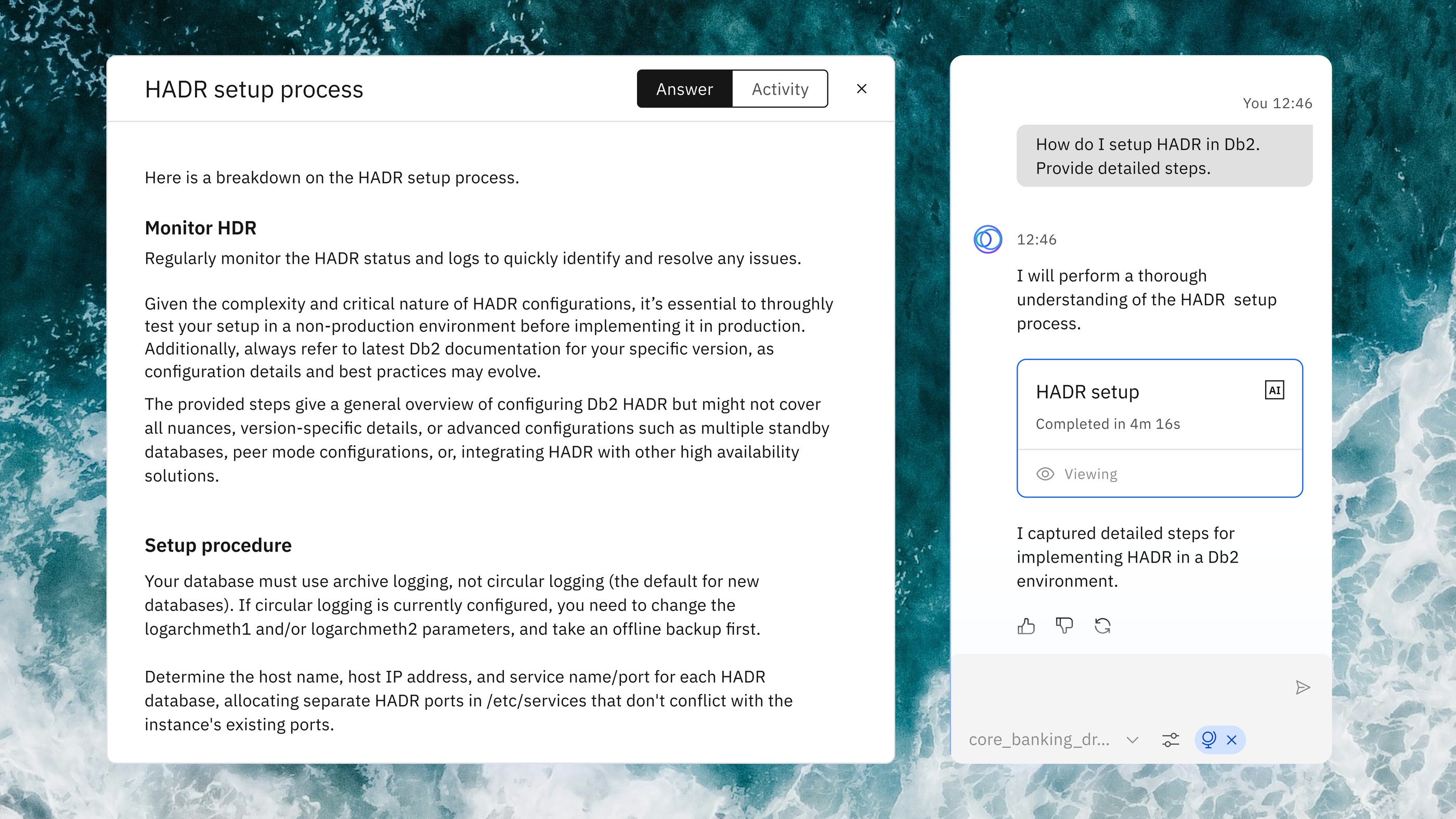
Deep research affords many opportunities: ease of client migration to Db2, the bridge to close the immense expertise between Junior and Senior Database Administrator, and the improved digestibility of extensive product documentation.
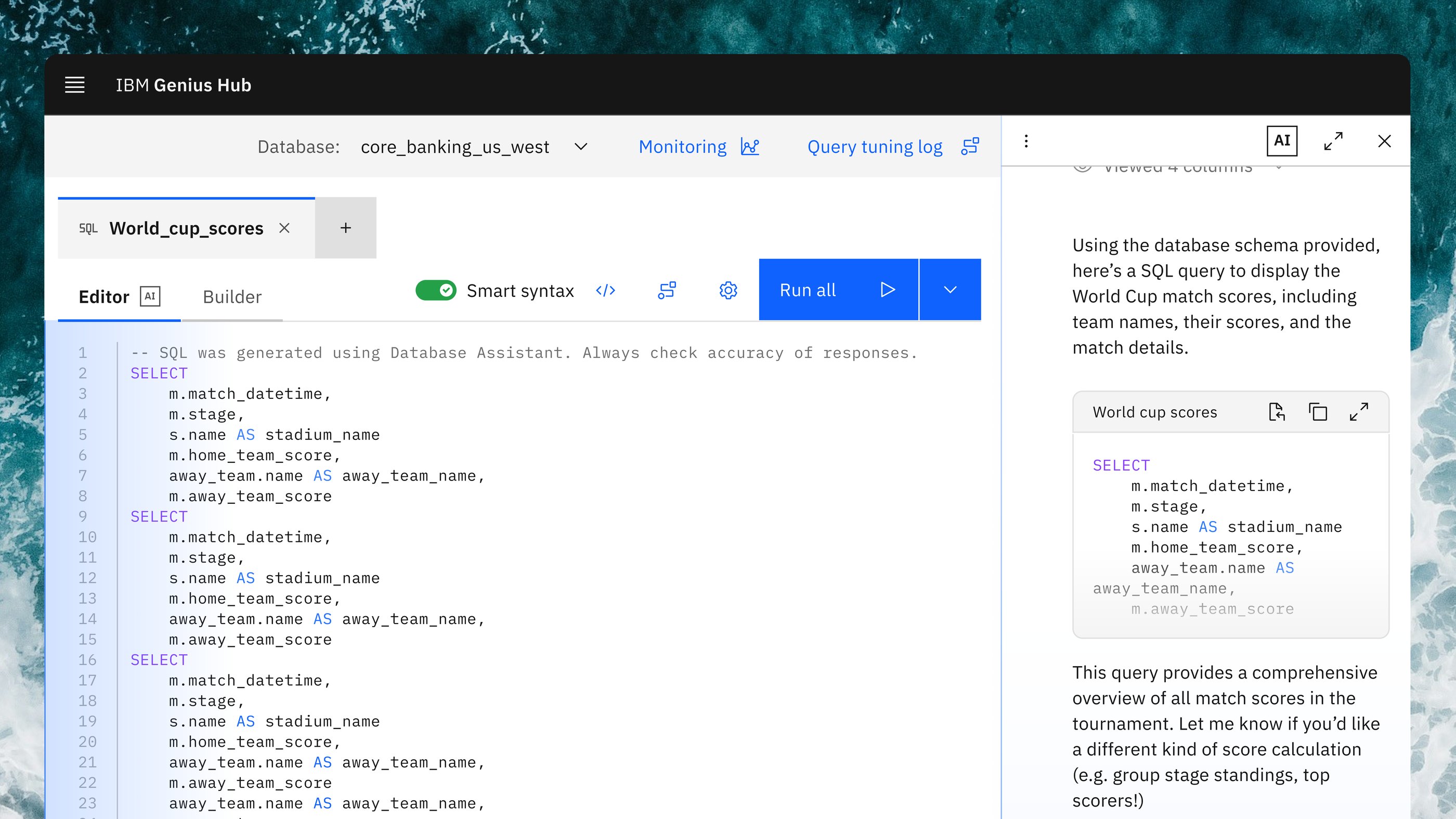
Text2SQL reimagines how DBAs and analysts interact with complex Db2 databases, replacing manual SQL authorship with a natural language interface that autonomously explores schemas, generates SQL, and surfaces its reasoning at every step.
The to-do list illustrates the breakdown and real-time progression of a complex task. Operational transparency is crucial to AI trustworthiness. Inspired by an existing AI chat plan component, this Plan componentry captures the progression of the tasks granularly, with the generated query ready to be opened.
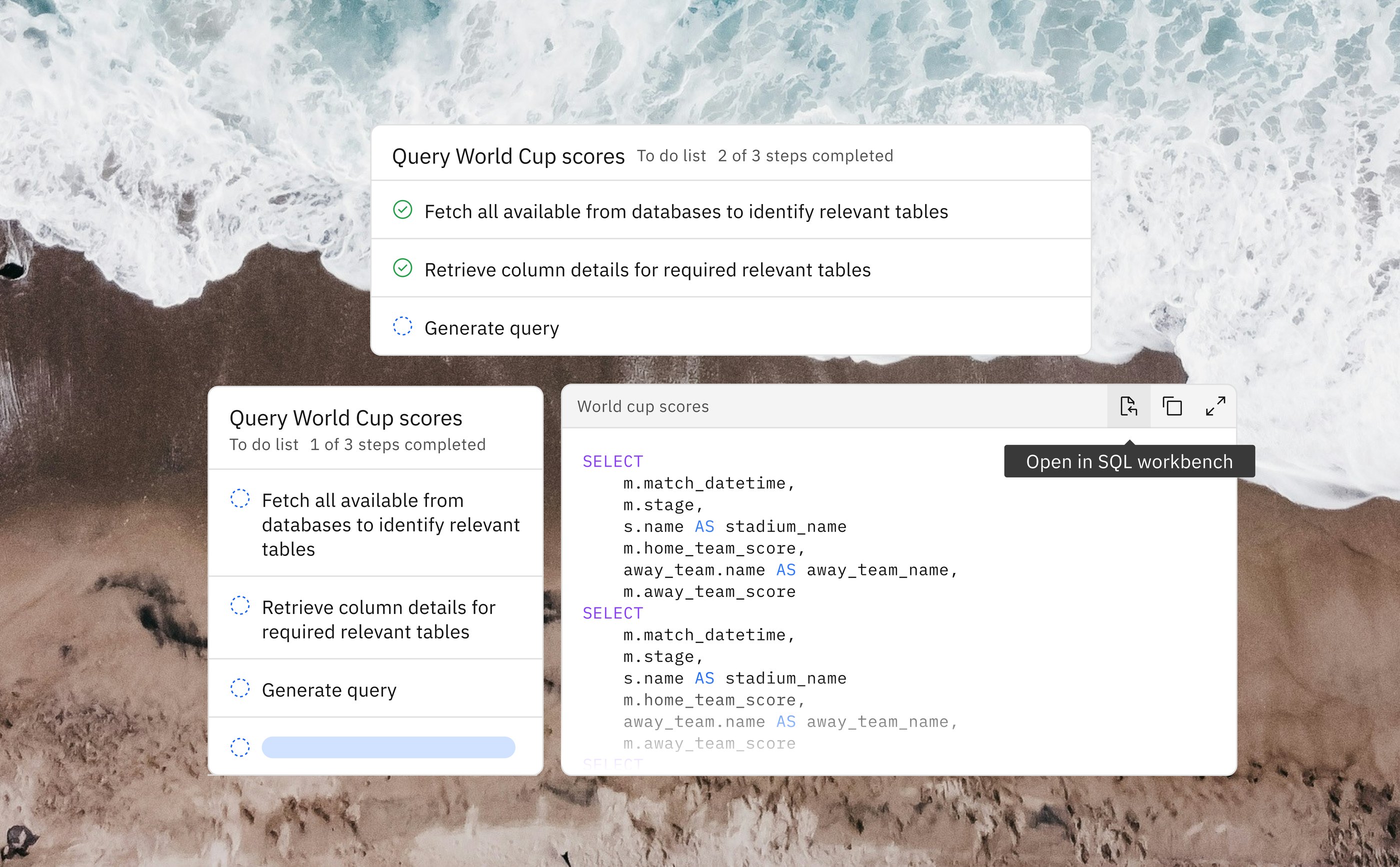
I lent my expertise in Text2SQL and Human-in-the-loop UI/UX to an emerging design system workgroup called Ambient Intelligence and the watsonx.data product portfolio.
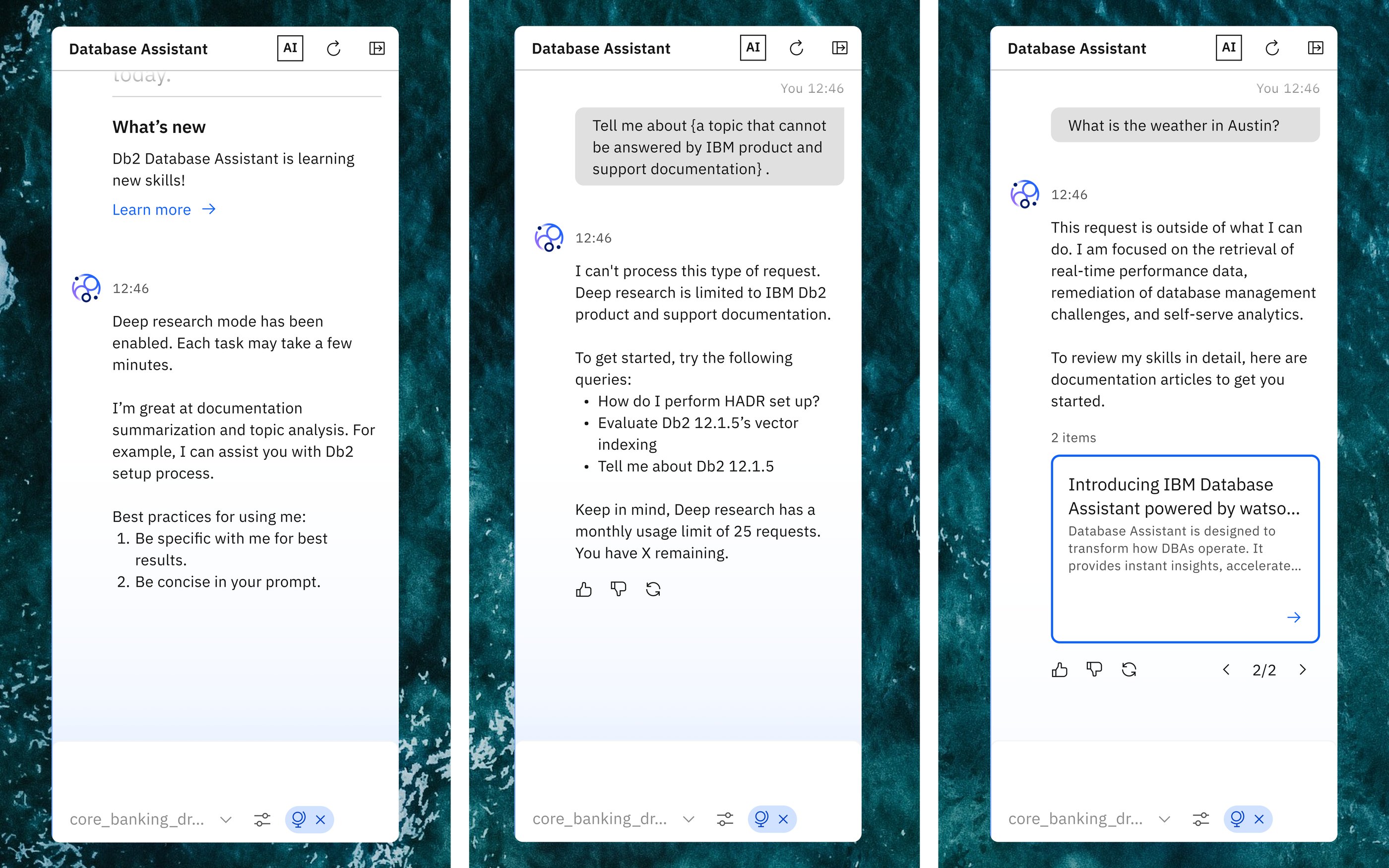
Conversational design
Keep conversations natural: Handling out of scope requests
Educate users on out of scope queries. Inform next steps and suggest concrete examples to prevent dead-end experiences.
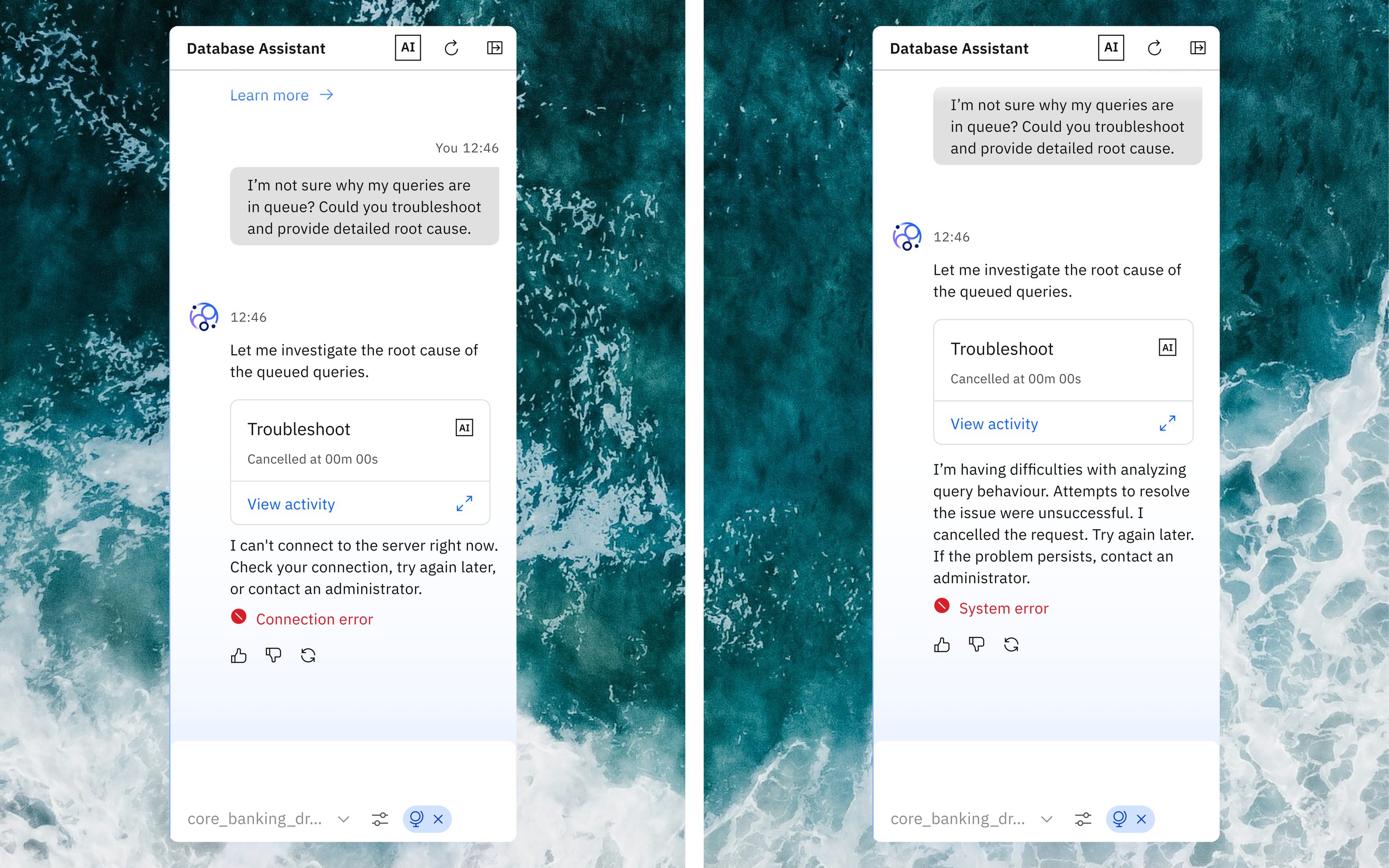
Handover escalation and error states
Sometimes, not all situations can be handled by Agents. An effective handover escalation method is to escalate it to the right person or role.
Early explorations
Cursor, Claude Code, and other IDEs were largely studied for Agentic developer use cases. First to release Agentic experiences for database management use cases and beyond, Palantir AIP, Supabase and Databricks were studied.
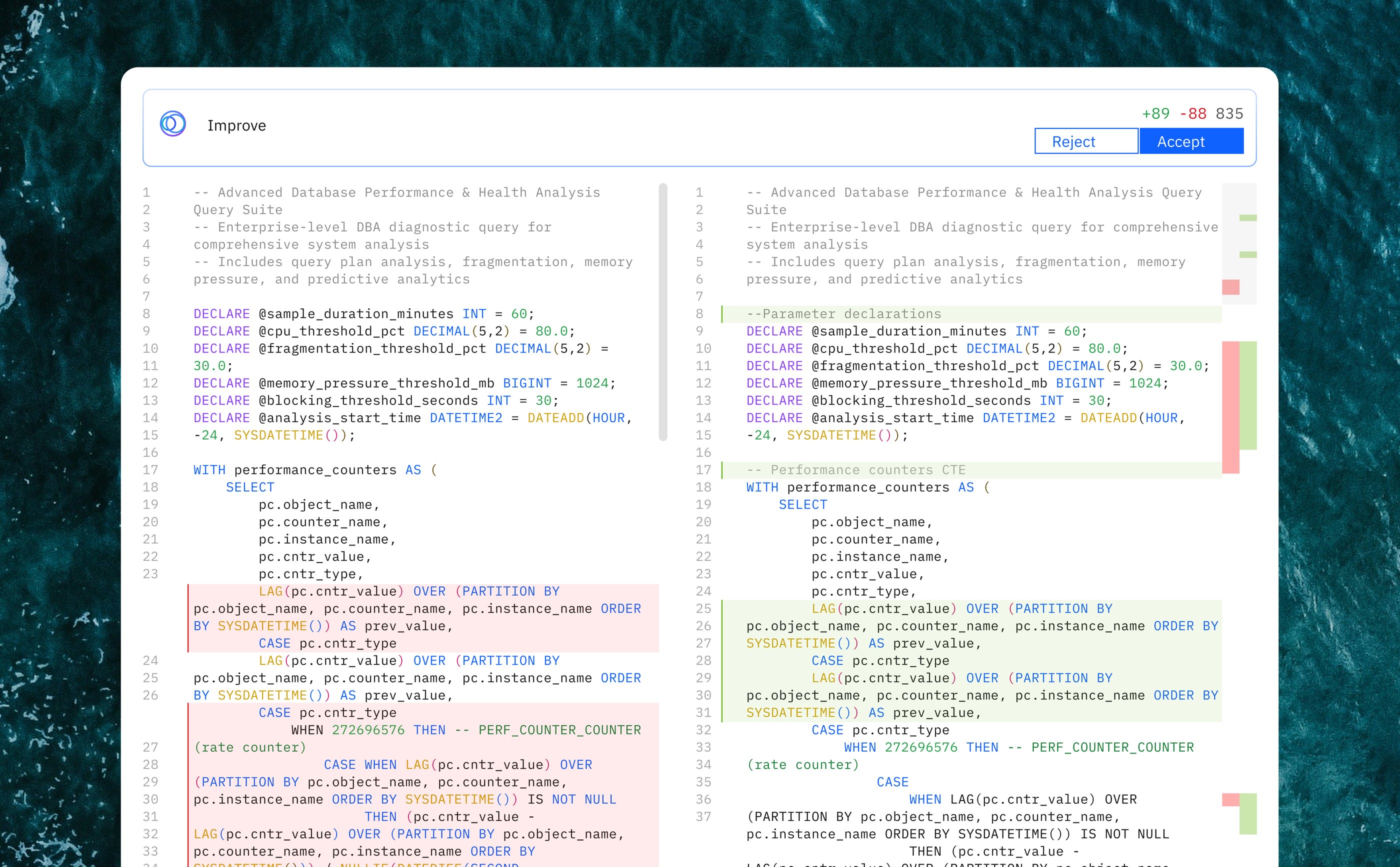
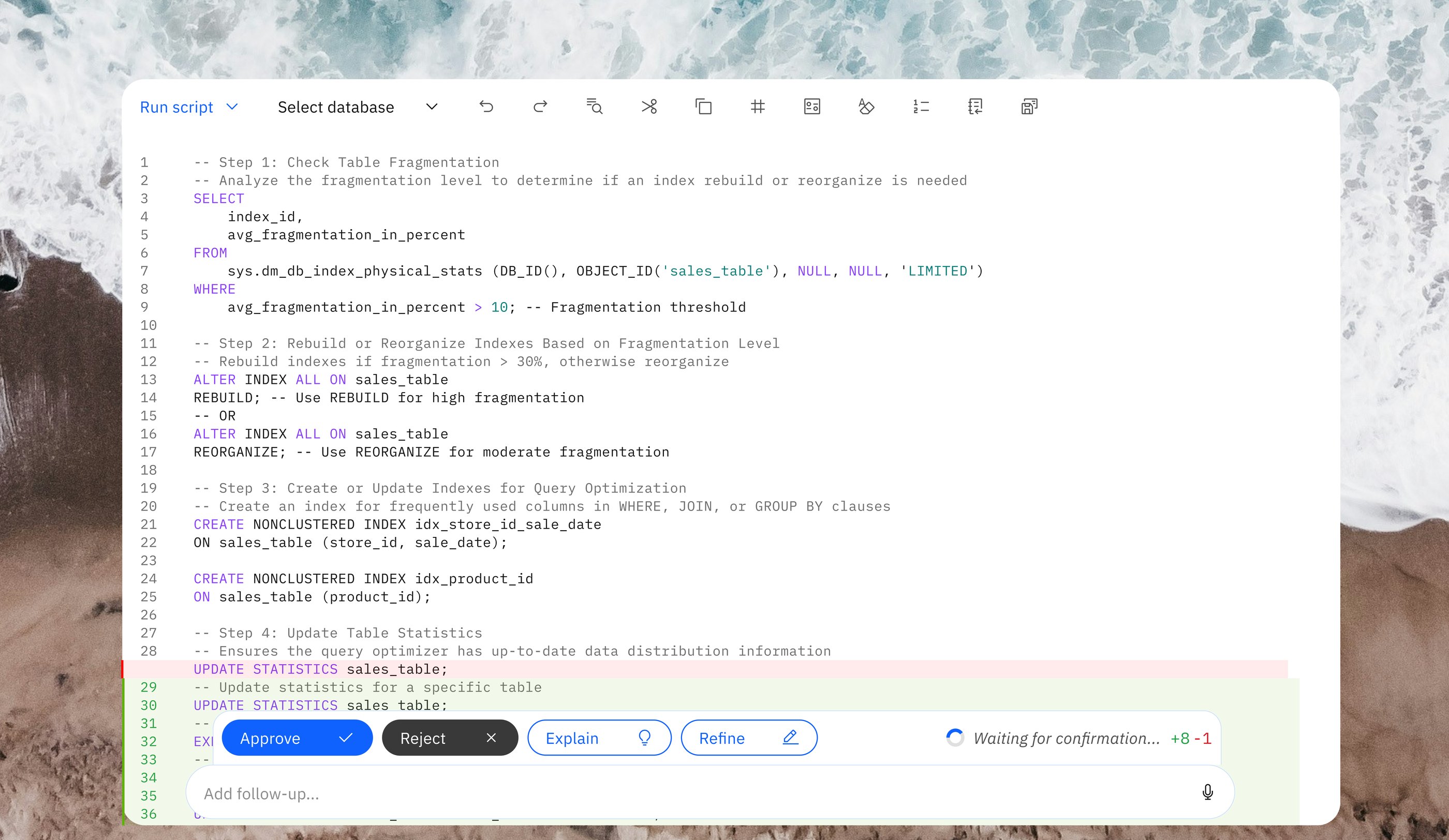
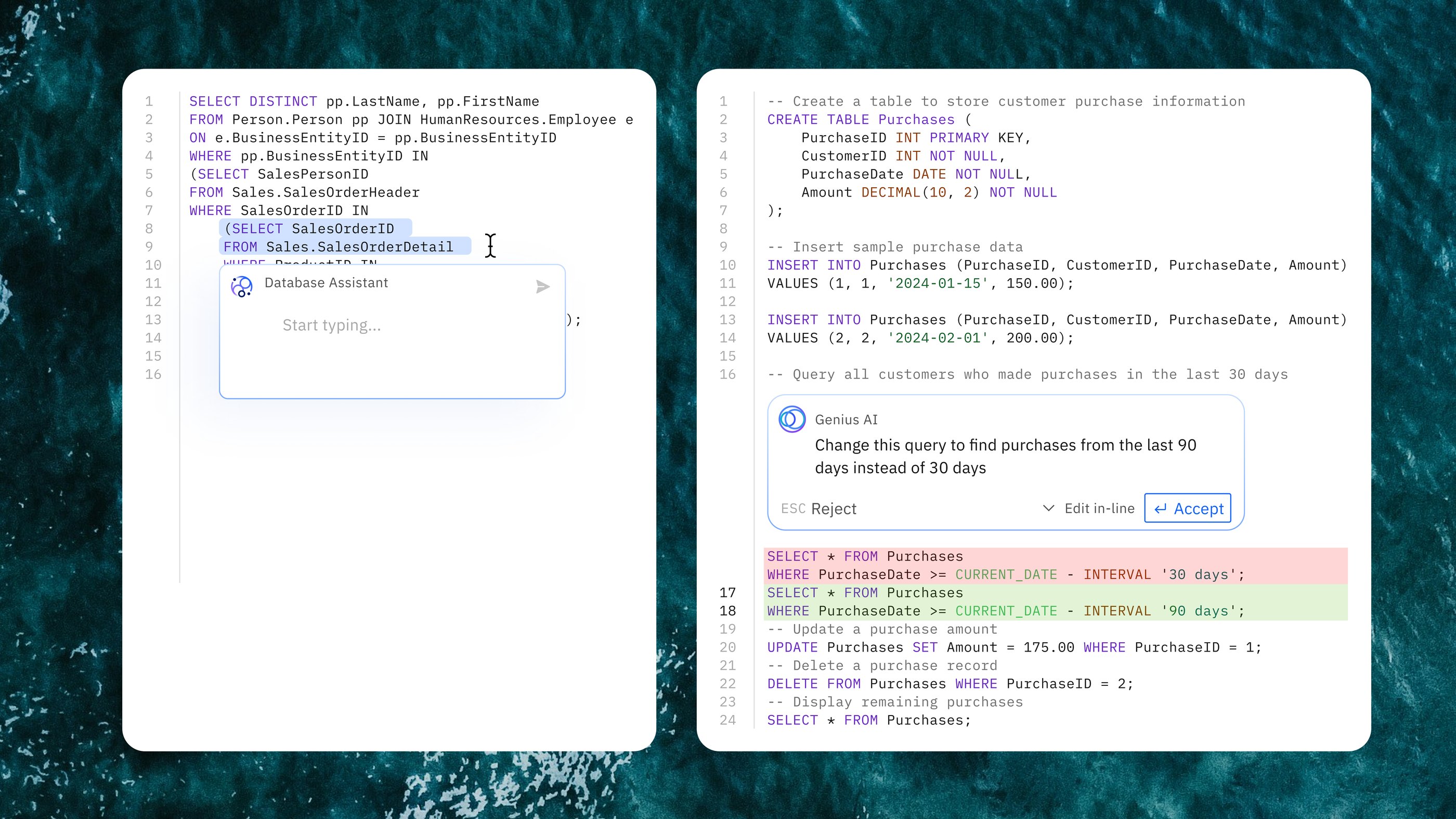
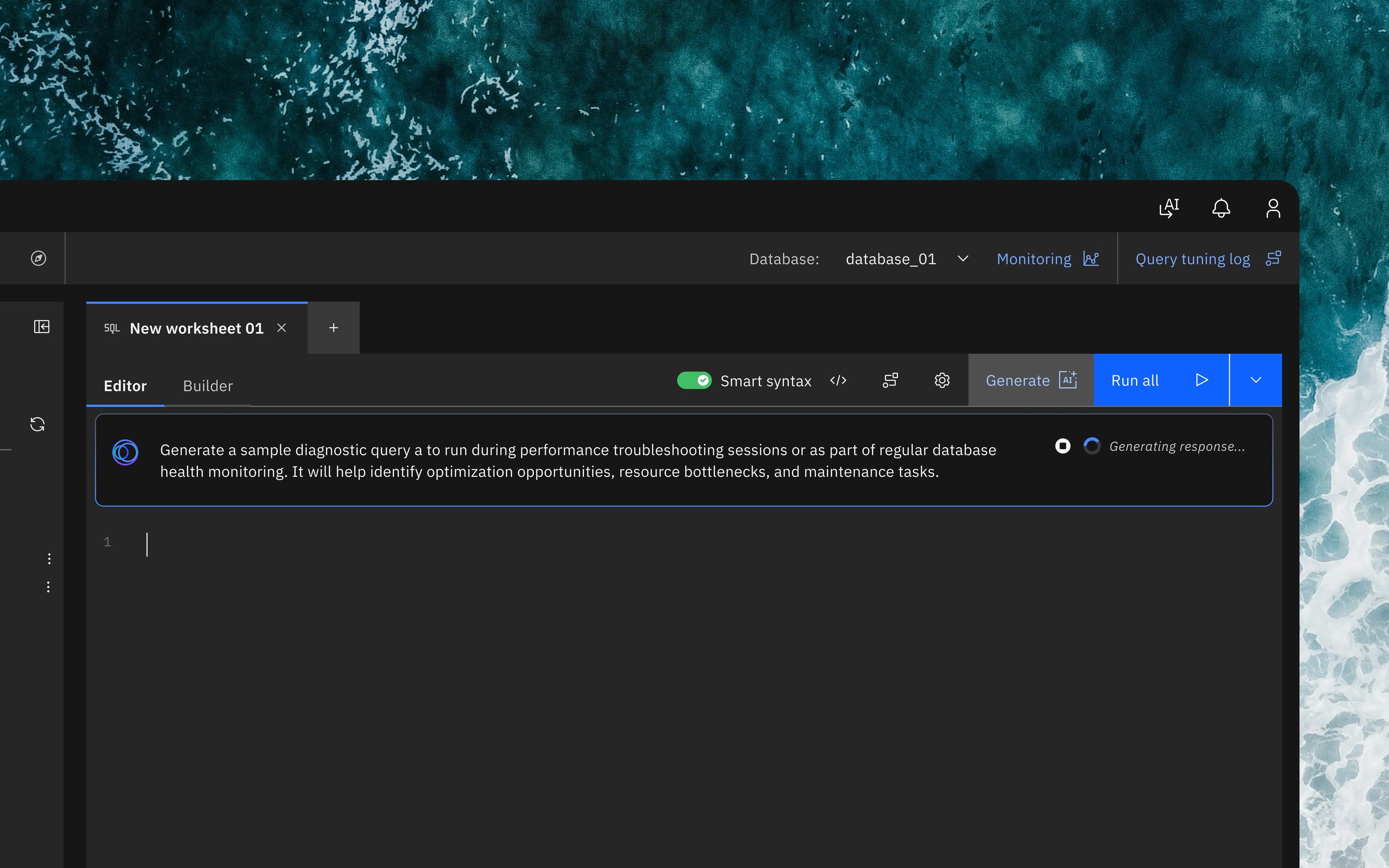
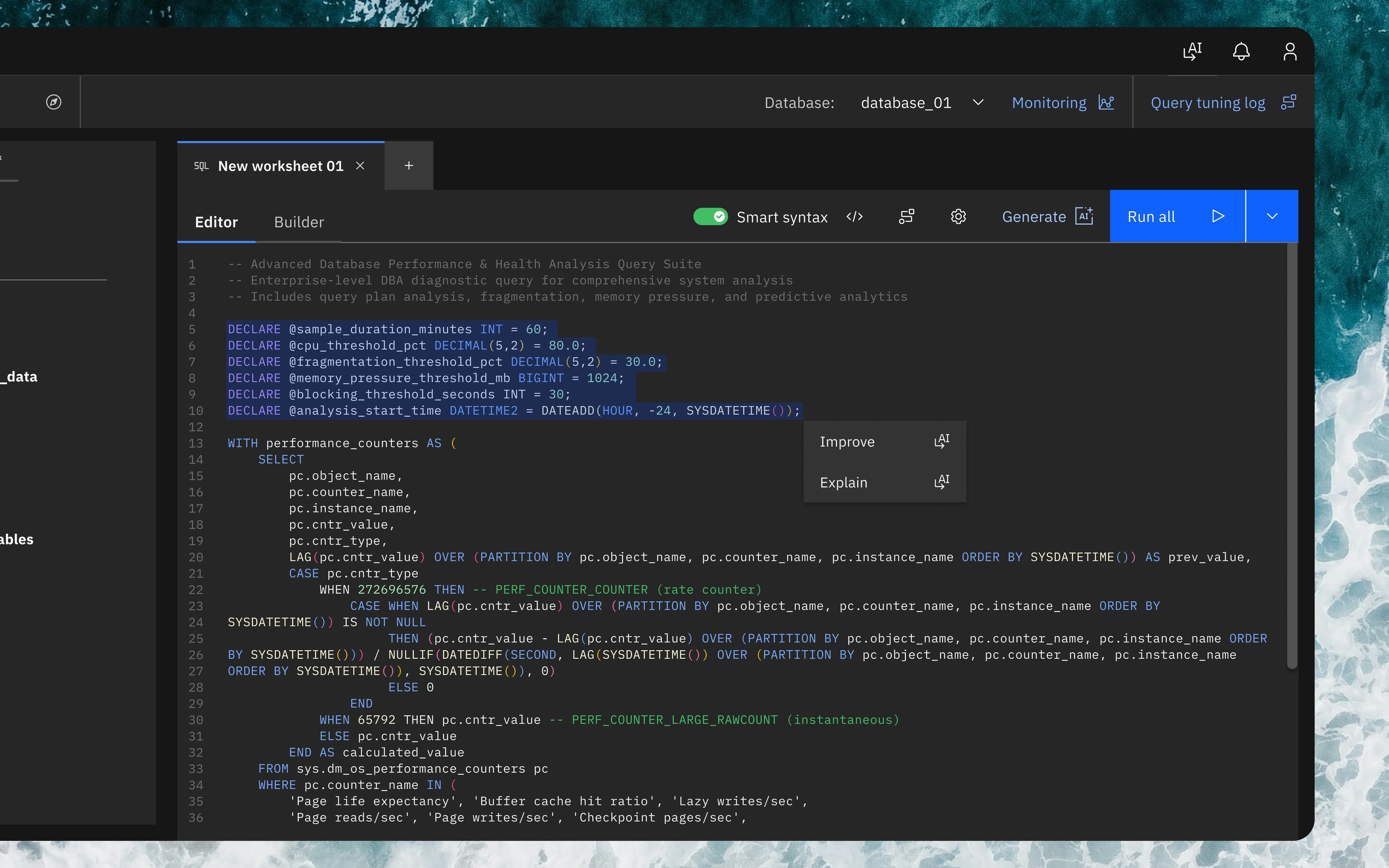
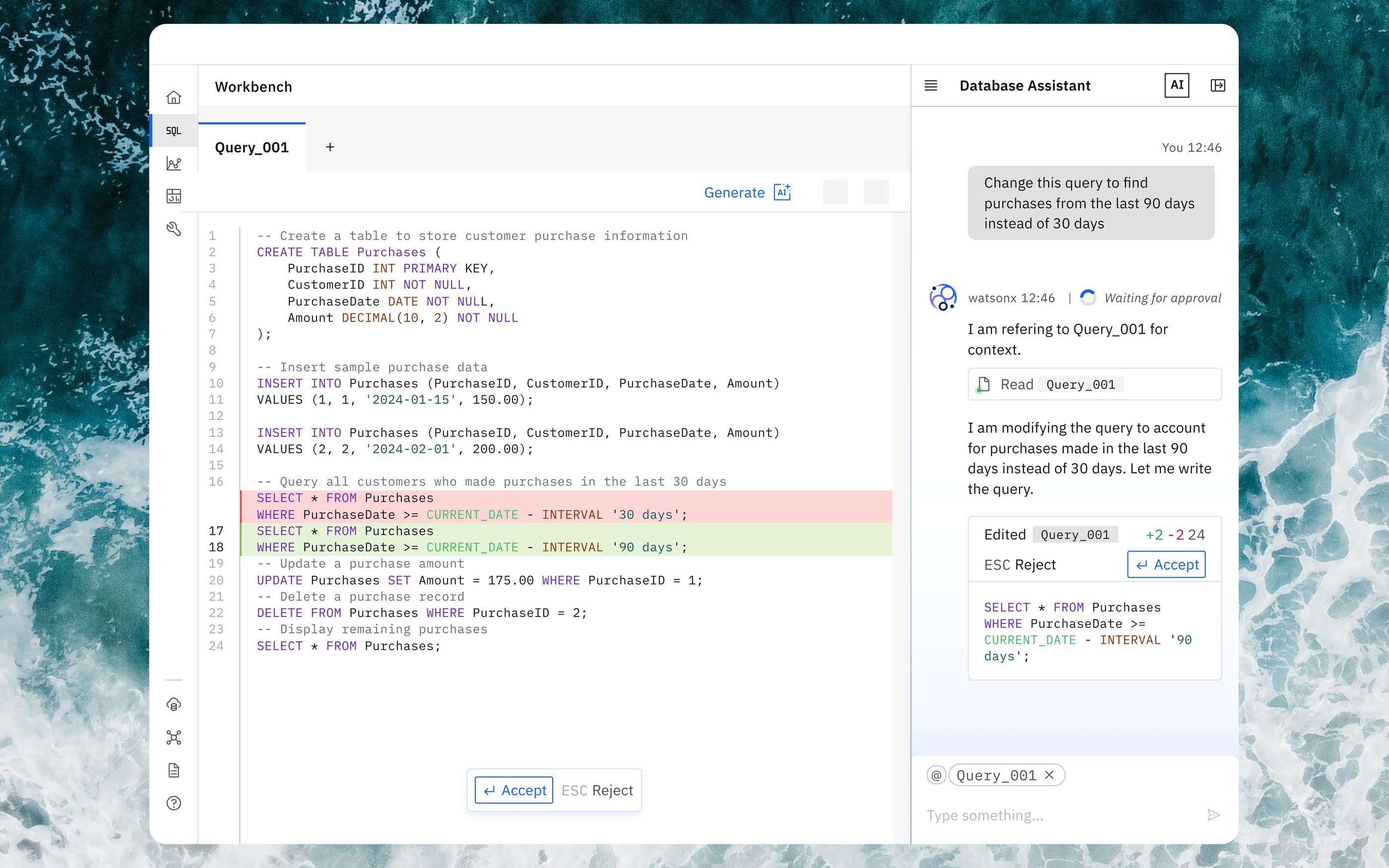
Text2SQL could be leveraged at any point in Database Administrators’ workflow - whether creating code from scratch or editing existing code. Considering accessibility, large visual transformations, and strained engineering resources at the time, Text2SQL Phase 1 is primarily an AI side panel chat experience.
What didn’t ship
Design shifted through many iterations: constrained by rigid architectural limitations, expanded by eureka-moment architectural possibilities, and guided by ever-changing highly experimental comparative Agentic UI products in the market.
Inversely, a user could pass context from the SQL Worksheet to AI chat side panel. Users could work from the file natively independent from the AI chat side panel. Agentic IDEs like Cursor are known for this ease of use. However, it was not architecturally possible at the time to pass context from front-end to the Agent.
As emphasized by UX research findings, minimal, necessary information and visual componentry is highly preferred by Database Administrators. While these UI patterns were present in Agentic IDEs at the time, these patterns occupied more space that I had envisioned. For example, while Agentic IDEs could set font sizes as small as 12, body font sizes cannot be less than 14 for Accessibility reasons.
In a scenario where in-line editing directly from the SQL Worksheet Editor was not possible, the selection of the ‘Generate with AI’ button on the SQL Worksheet toolbar could take users to a modal workspace. This added layer was discarded due to redundancy.
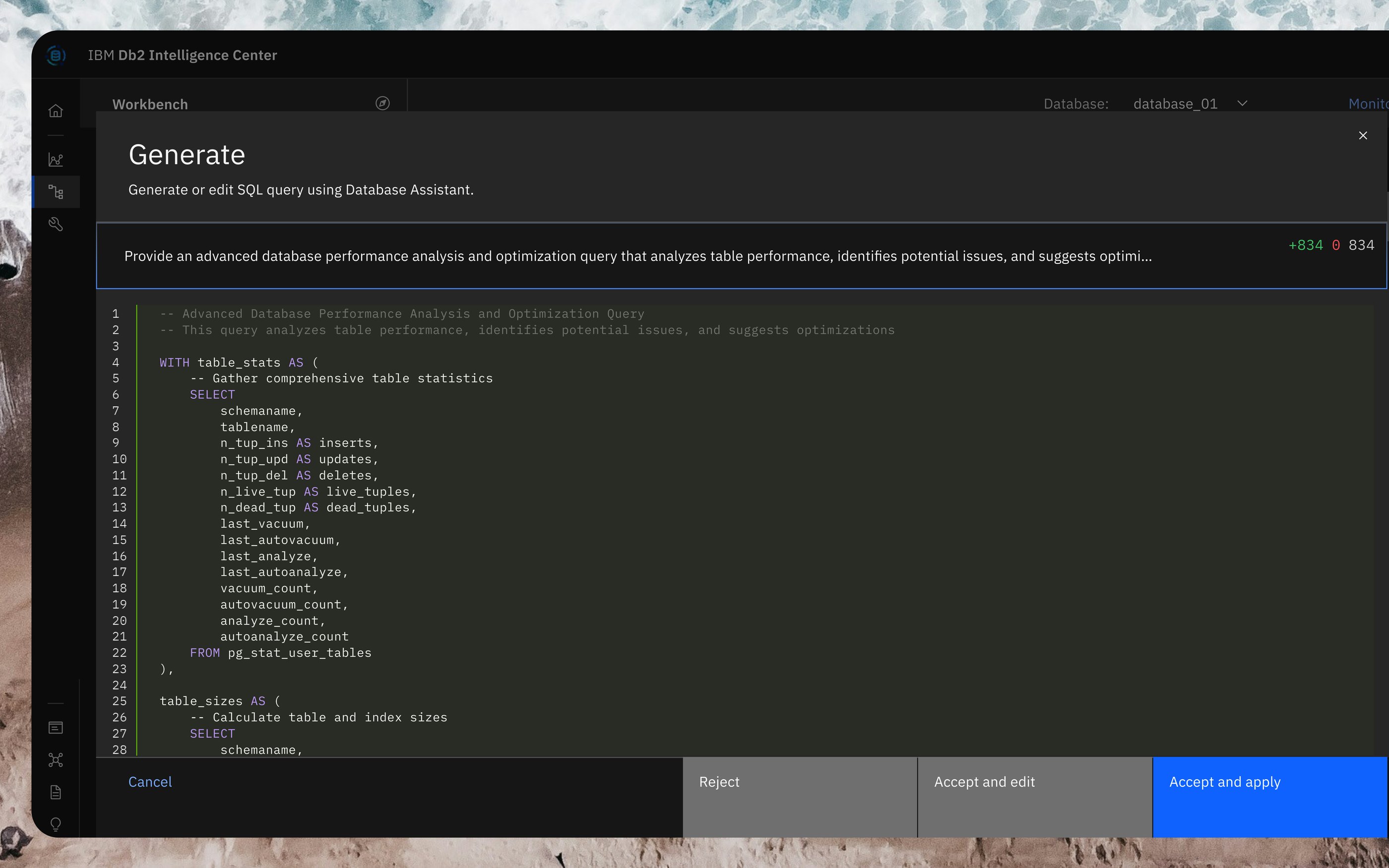
This effort is not short of pivots and experimental concepts. Reach out to learn more.
Impact
Set a higher bar for Agentic design as a design org AI SME
Design teams across IBM came to me for competitive analysis and direction on in-flight work. Through 1:1 advisory and cross-portfolio shareouts, I shaped AI product decisions beyond my own organization (Core software) and a sister design org (Platform software).
I owned a 0→1 project and became Product and Engineering’s peer on AI product decisions.
There was no playbook for Agentic AI UI/UX at IBM — product teams had only ever built authoring experiences. I navigate ambiguity and lead design without waiting for requirements, co-creating direction with PM and customer feedback. With my growing domain knowledge in Agentic AI and AI for design, I confidently argued trade-offs with Engineering, and shaped what shipped.